
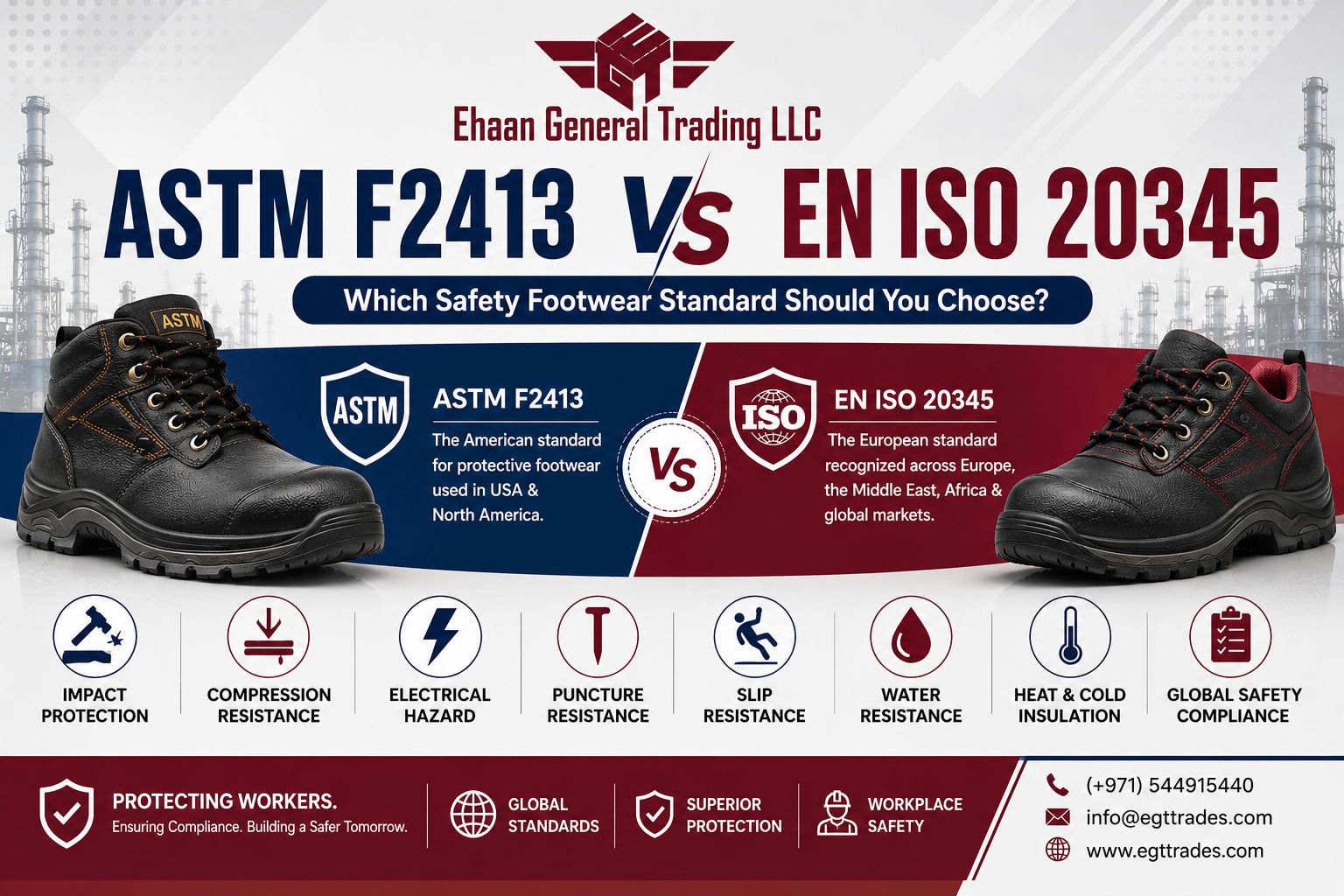
ASTM F2413 vs EN ISO 20345: Which Safety Footwear Standard Should You Choose?
Choosing the right safety footwear is essential for protecting workers and ensuring compliance with workplace safety regulations. Two of the most recognized safety footwear standards worldwide are ASTM F2413 and EN ISO 20345.
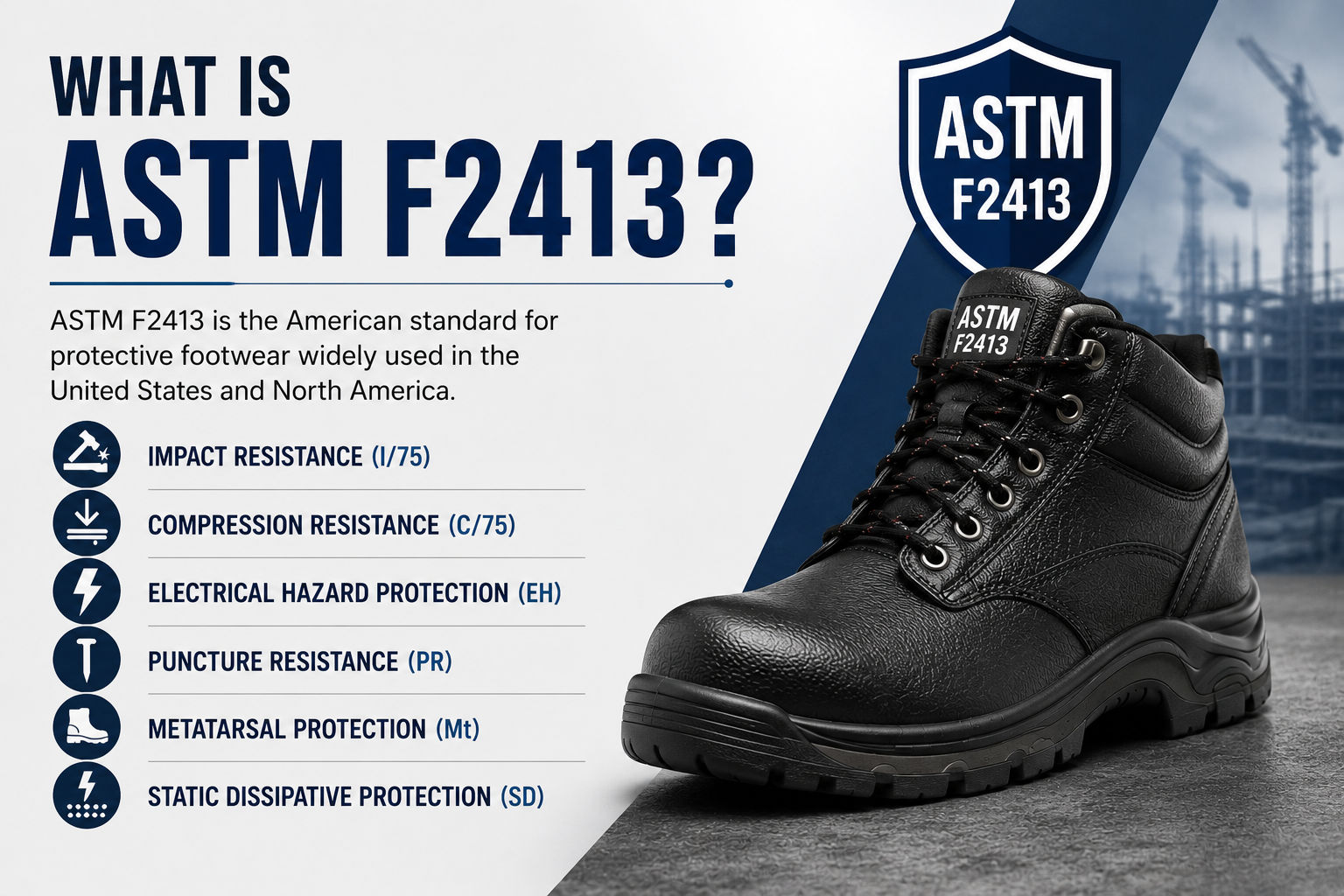
What is ASTM F2413?
ASTM F2413 is the American standard for protective footwear widely used in the United States and North America.
- Impact Resistance (I/75)
- Compression Resistance (C/75)
- Electrical Hazard Protection (EH)
- Puncture Resistance (PR)
- Metatarsal Protection (Mt)
- Static Dissipative Protection (SD)
A typical ASTM marking may read: ASTM F2413-18 M/I/C EH PR.
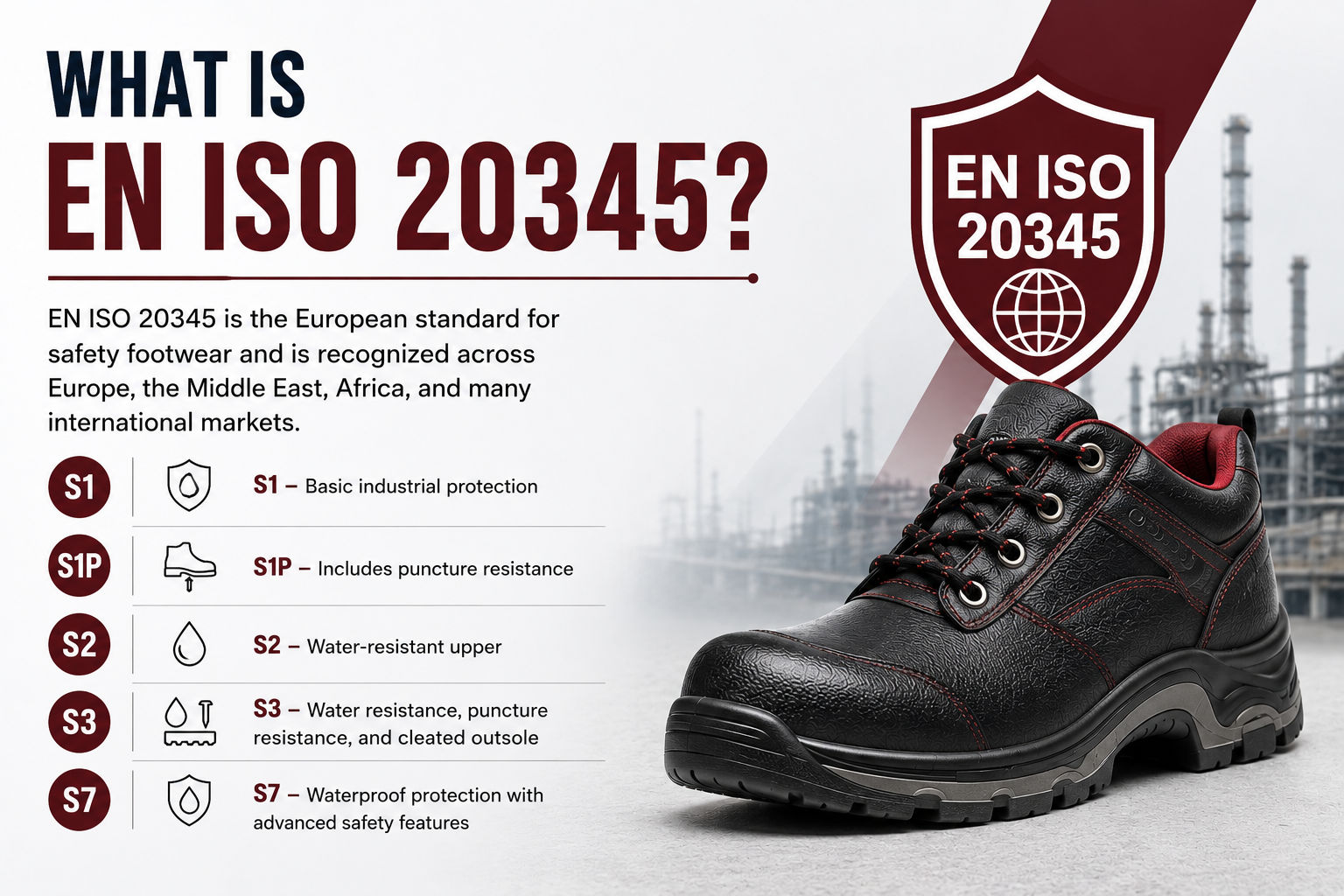
What is EN ISO 20345?
EN ISO 20345 is the European standard for safety footwear and is recognized across Europe, the Middle East, Africa, and many international markets.
- S1 – Basic industrial protection
- S1P – Includes puncture resistance
- S2 – Water-resistant upper
- S3 – Water resistance, puncture resistance, and cleated outsole
- S7 – Waterproof protection with advanced safety features
ASTM F2413 vs EN ISO 20345: Key Differences
| Feature | ASTM F2413 | EN ISO 20345 |
|---|---|---|
| Main Market | USA & North America | Europe & Global Markets |
| Toe Impact Resistance | 101.7 J | 200 J |
| Compression Resistance | 11.1 kN | 15 kN |
| Electrical Hazard Protection | Included | Not directly specified |
| Slip Resistance | Optional | Mandatory |
| Puncture Resistance | PR | P, PL, PS |
| Waterproof Categories | Limited | WR, WPA |
| Heat & Cold Insulation | Limited | HI, CI |
| Classification System | Performance Codes | S1, S2, S3, S7 Categories |
Which Standard is Better?
Neither standard is universally better; the right choice depends on your workplace requirements.
Choose ASTM F2413 if:
- Your operations are based in North America.
- OSHA compliance is required.
- Electrical hazard protection is important.
- Customers specify ASTM-certified footwear.
Choose EN ISO 20345 if:
- You operate in Europe, the Middle East, or international markets.
- Slip resistance is a key safety concern.
- Waterproof, heat-resistant, or cold-insulated footwear is needed.
- You require detailed safety classifications.
Can Footwear Meet Both Standards?
Yes. Many leading safety footwear manufacturers offer products certified to both ASTM F2413 and EN ISO 20345. Dual-certified footwear is ideal for multinational companies, international projects, and organizations seeking global compliance.
Conclusion
When comparing ASTM F2413 vs EN ISO 20345, the best choice depends on your industry, location, and workplace hazards. ASTM F2413 is the preferred standard for North America, while EN ISO 20345 provides broader hazard classifications and international recognition.
For companies operating across multiple regions, dual-certified safety footwear offers the greatest flexibility and protection.
Before purchasing safety footwear, conduct a workplace risk assessment and ensure the selected footwear meets both regulatory and operational requirements.